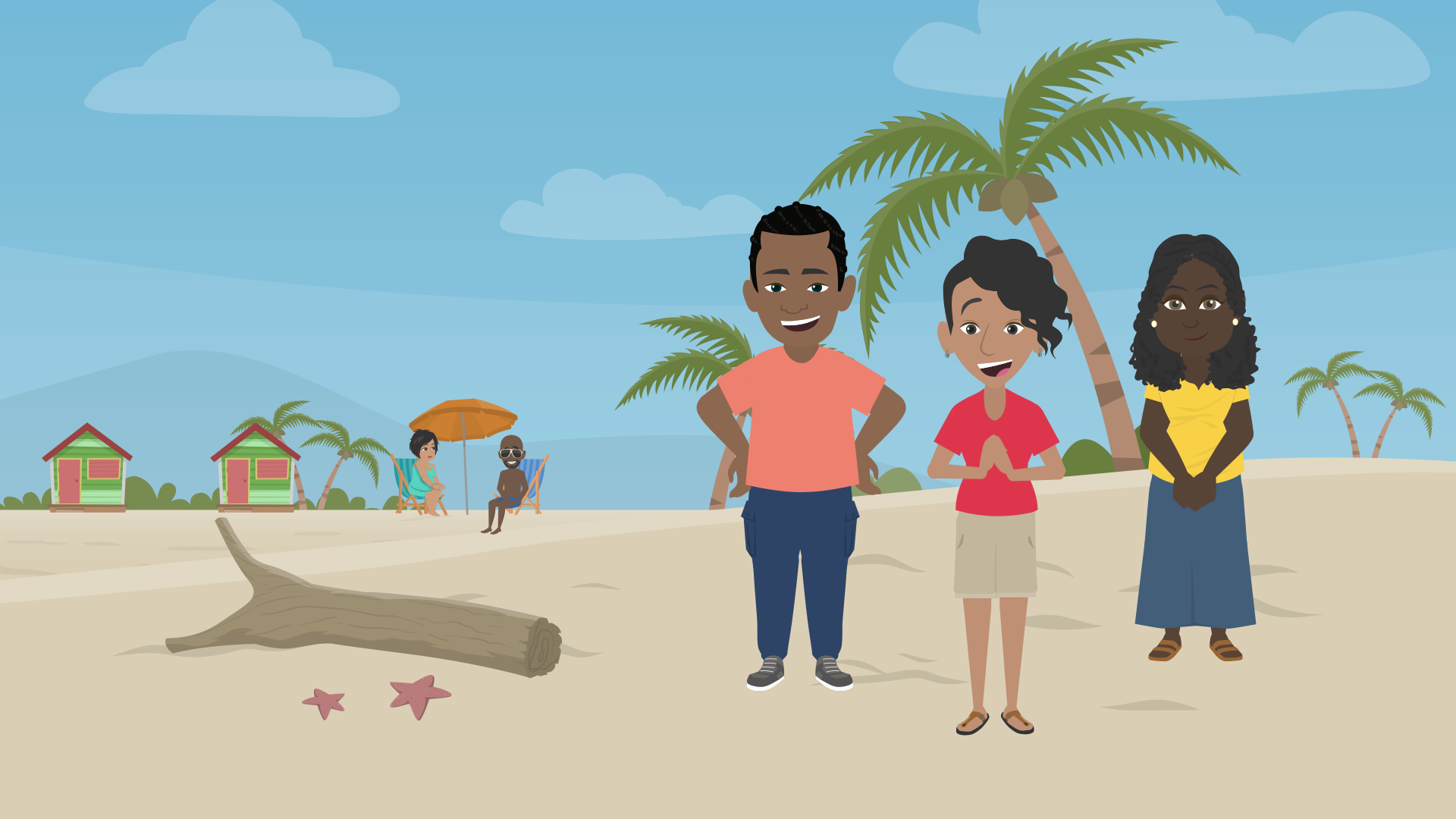
Project Esperanza Orientation eLearning Course
Explore the Course“Allie took everything off my plate and turned our messy documents into a real course. She put in the work to truly understand our community and our history. Our volunteers now show up at the airport prepared and ready to jump in.”
Context & My Role
I designed an hour-long eLearning orientation for Project Esperanza, a nonprofit serving Haitian migrants and refugees in Puerto Plata, Dominican Republic. I led the full project, conducting the needs analysis, writing the course blueprint, drafting the script, storyboarding the experience, and producing the final course in Articulate Storyline and Vyond. I worked closely with Project Esperanza's Director as my primary SME, and also brought in a Haitian-Dominican history scholar to make sure the historical sections were accurate.
Each year, roughly one hundred volunteers travel from the United States and Canada to work with Project Esperanza. They come as individuals and as members of school, college, and church groups. Their motivations vary widely: some are deeply aligned with the mission but lack the cultural and historical context to act on it effectively; others are drawn more by the experience itself and need the course to help them understand why they're there at all. What they share is that they're arriving in a community shaped by centuries of complex history, and they need to be ready to engage effectively when they land.
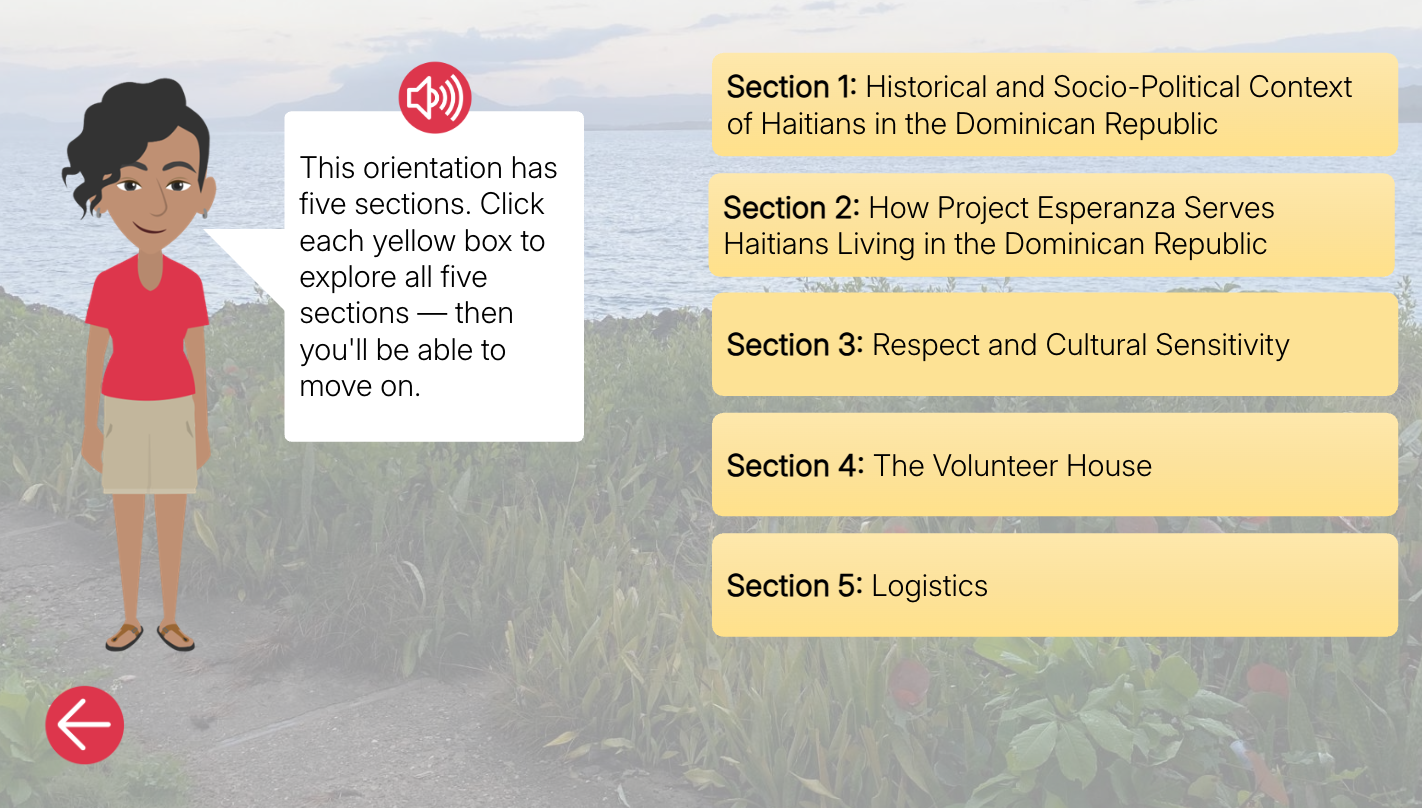
Storyline slide showing all sections of the course
The Problem Worth Solving
Volunteers often lack a strong understanding of the cultural, historical, or logistical context of the community they're entering. That gap shows up as well-meaning but harmful behavior like uninformed comments about Haitian migration, a charity-rather-than-empowerment mindset, gifts that create dependency among children, frustration with the Volunteer House's infrastructure, and missed paperwork. Each of these consequences costs the organization time, trust with the community, and energy that should be going toward the mission.
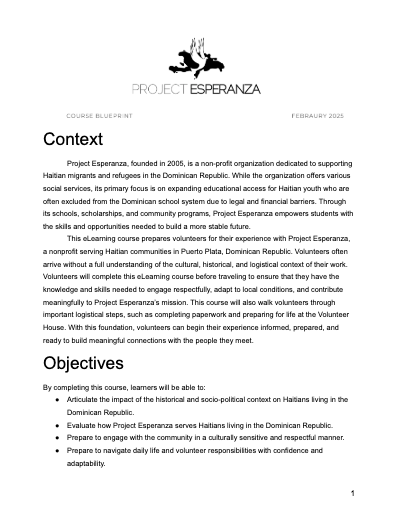
Course Blueprint
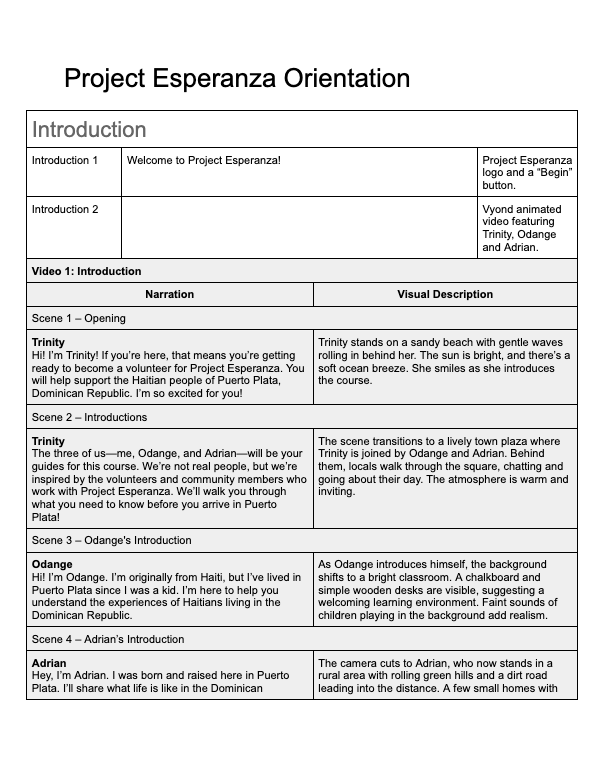
Script
My Strategic Approach
I structured the course around historical and political context before behavioral guidance. The challenges facing Haitians in the Dominican Republic are rooted in centuries of dynamic history. I believe it is essential to reveal the why to learners before telling them how to behave. Once learners see how today's struggles connect to the past, the cultural guidance later in the course becomes intuitive instead of arbitrary.
I built the course around three diverse characters: a U.S. volunteer, a Haitian community member, and a Dominican community member. The volunteer experience itself sits at the intersection of those three perspectives, so the learner needed to hear from all three from the beginning.
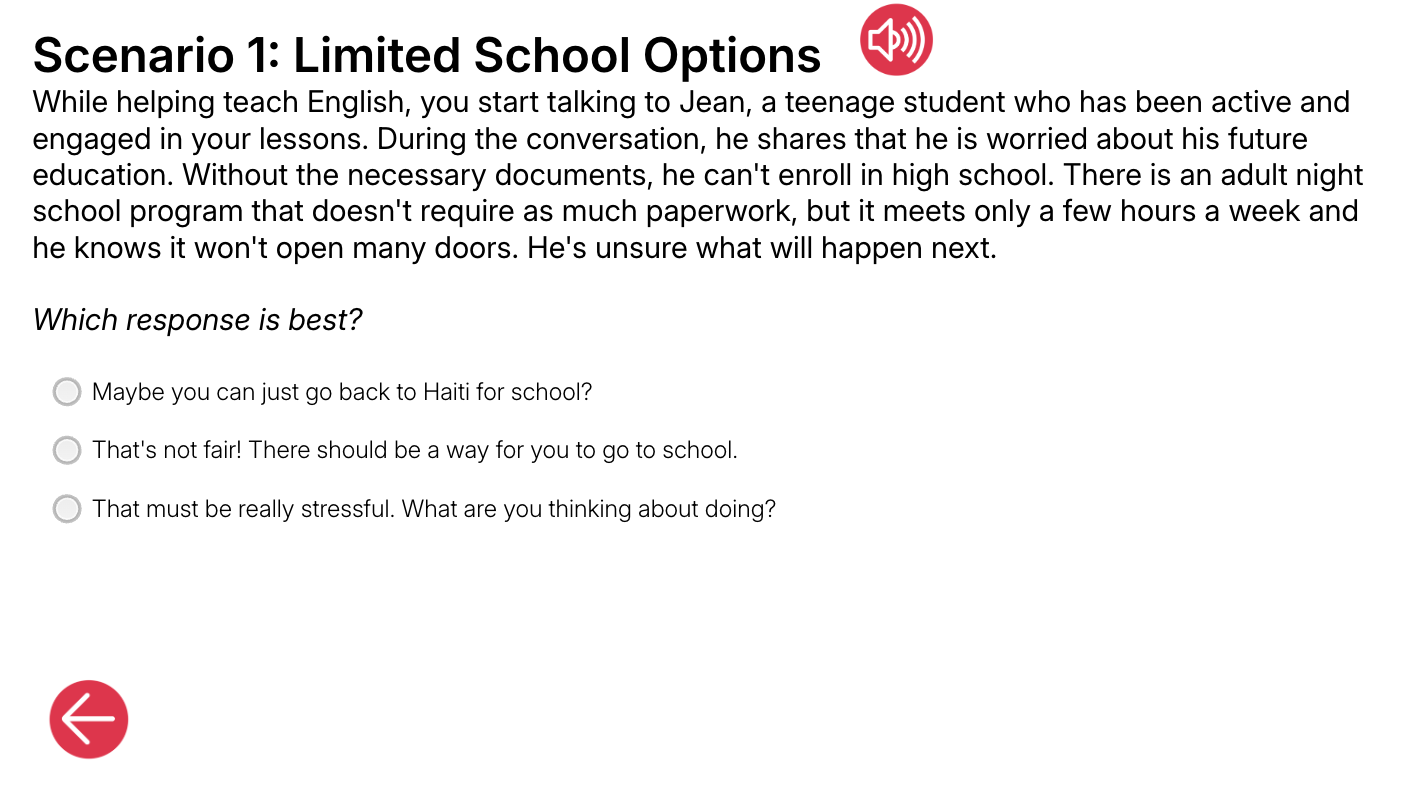
Volunteers practice challenging conversations
The Learner Experience
My first design priority was immersion — not only as an aesthetic choice, but also as a transfer strategy. Volunteers arrive in Puerto Plata and immediately encounter a context that is unfamiliar: the sounds, the landscape, the texture of daily life are all different. The longer it takes to adjust, the longer it takes to contribute meaningfully to Project Esperanza's mission. I made the sensory design choices in the course with that contextual adjustment in mind. I used Dominican and Haitian accents for the characters' voices, actual Project Esperanza locations as visual backgrounds, and ambient street sounds in the Cultural Awareness video — all to begin that cultural adjustment before volunteers ever board a plane.
The second design priority was engagement that couldn't be skipped. Volunteers lead busy lives, and online training can feel like a box to check, but a course that can be clicked through without consequence doesn't work. Knowledge checks gate progression through foundational content: learners cannot move past the history or mission sections without genuinely engaging with the material. That wasn't punitive, but protective — these are the pieces a volunteer actually needs in order to show up well and have a meaningful experience.
Vyond video introducing volunteers to differences between American and Caribbean culture
From Design to Delivery
The hardest part of building this course was compressing more than five hundred years of Hispaniola's history into roughly eleven minutes of video without losing the threads that matter for a volunteer's day-to-day experience. Working with the Haitian-Dominican history scholar, I made hundreds of small calls about what to highlight and what to cut.
Every milestone — needs analysis, blueprint, script, storyboard, build — went through the Director, whose feedback was especially formative in shaping the cultural authenticity of the three guides. I used Articulate Storyline for the interactive build, Vyond for animation, ElevenLabs for voice generation with Dominican and Haitian accents, and Canva for static visuals.
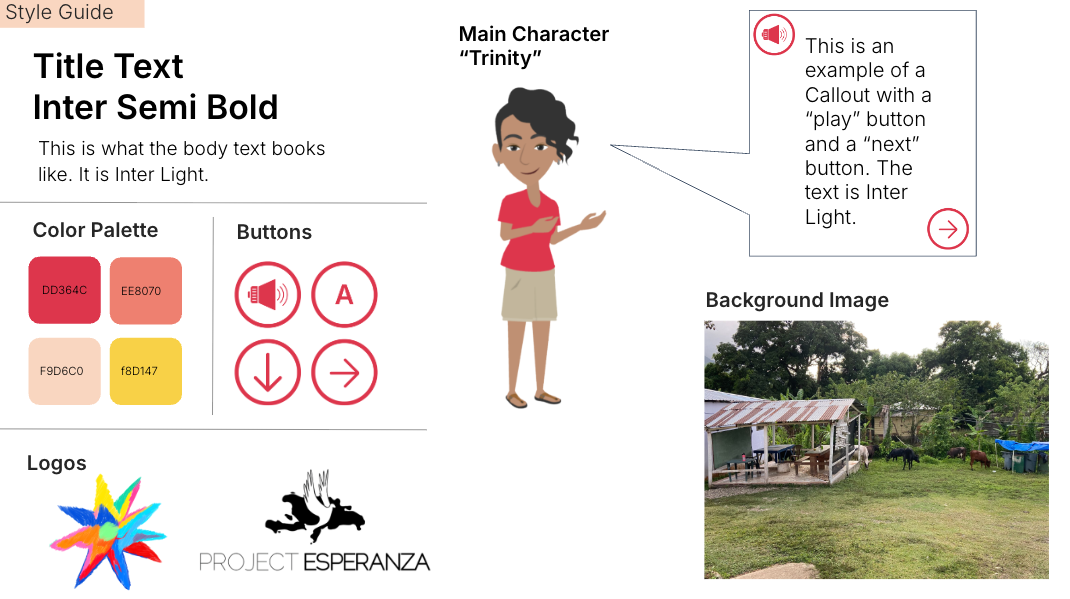
Storyboard
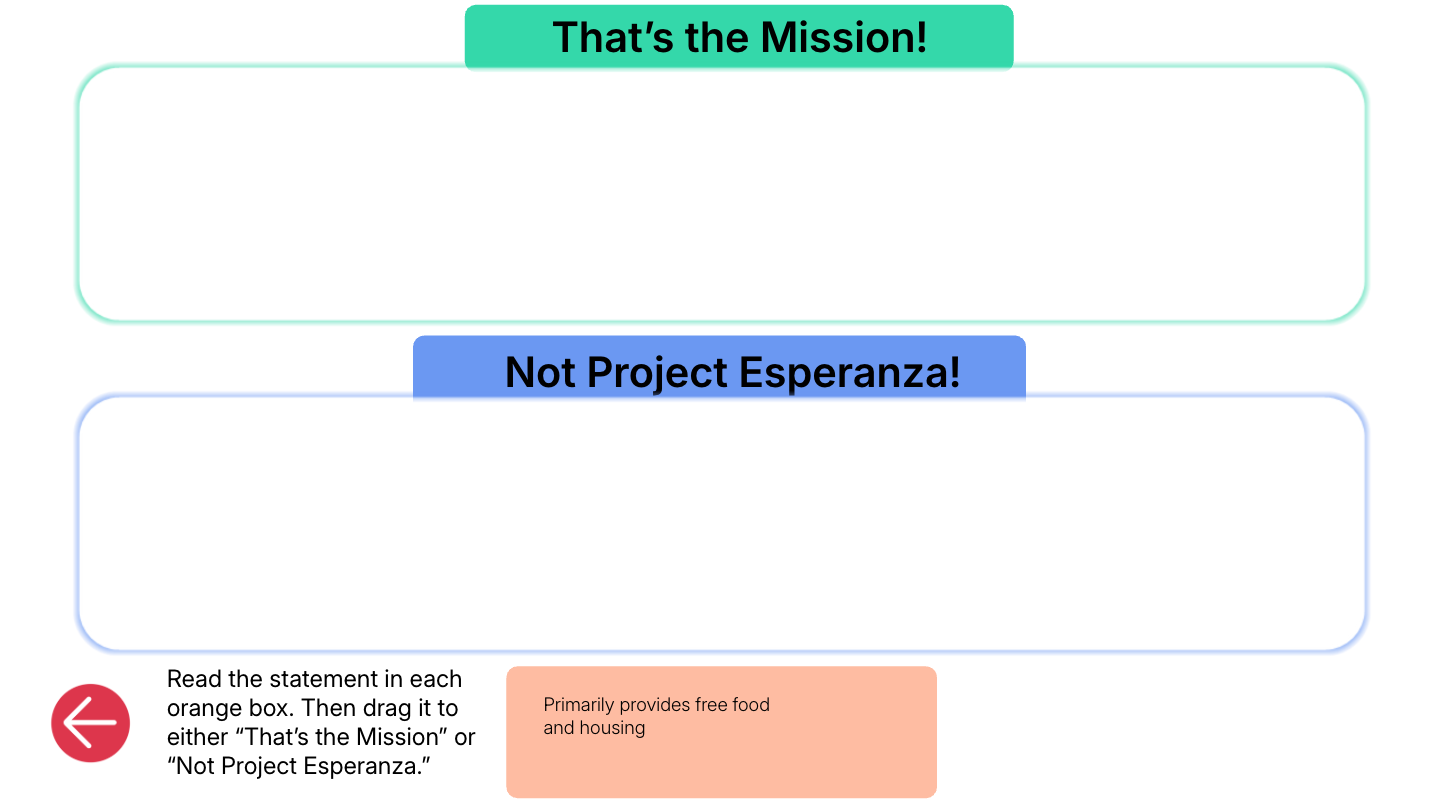
Drag and Drop interaction to reinforce Project Esperanza's mission
Results & Reflection
The course is live and in active use with Project Esperanza volunteers. I debriefed with the Director following the first cohort and will continue tracking whether volunteer interactions with the community shift as the course reaches more learners over time.
Two reflections I'm carrying into my next project. First, the empathy scenarios that follow the history video currently function as an assessment before learners have seen a full demonstration of what empathetic engagement actually sounds like. Strong demonstrations before assessment is a Merrill principle I want to be more disciplined about applying in future scripting.
Second, I built this course to WCAG Level A, but I know I have more to learn about accessible eLearning. Next time, I'd design with accessibility as a starting constraint rather than something I verify at the end.
Final Vyond video wishing volunteers safe travels and good luck