Parent Orientation

Context & My Role
When I heard rumblings that our parent orientation experience wasn't working, I asked to be involved. As a student adviser at an online secondary school serving grades 7 through 12, I had watched families come through orientation and arrive at their first advising meeting still confused — asking questions the orientation was supposed to answer. I also knew I had the skills to condense and sequence the information in a way that would really serve parents. I became the lead learning designer and project manager for a complete redesign of the parent orientation experience, moving it from a weekly live Zoom seminar to an asynchronous video series that parents could complete on their own time. I conducted the needs analysis, designed the content, produced all video assets, and trained our leadership team on recording before coordinating handoff to the development team who embedded the series into our enrollment portal. This project is proprietary and cannot be shown in full, but screenshots are included throughout.
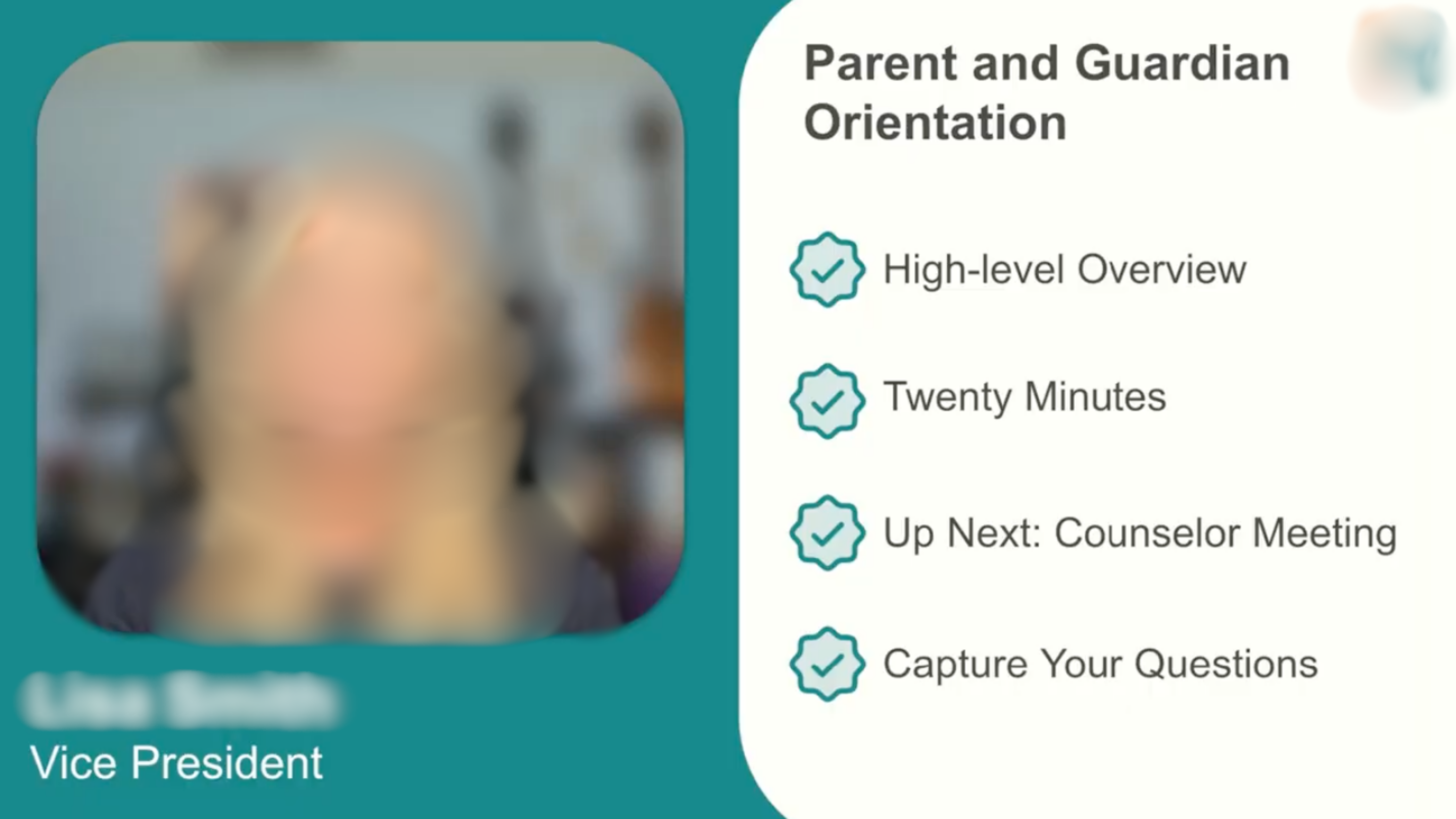
A still from the Welcome video, blurred for privacy

The Problem Worth Solving
The existing orientation was a weekly live Zoom seminar; our rolling admissions model means that families enroll year-round and start at different times. The seminar required a staff member to run it every single week, regardless of enrollment volume. Beyond the staffing cost, it wasn't working. Parents still had a flood of questions after the seminar. The content was too broad, not targeted to what parents actually needed to know, and had to happen at a fixed time that didn't work with most families' schedules. Staff, including me, were absorbing the downstream cost, answering the same questions again and again that the seminar was supposed to address.
Two other things surfaced clearly in my research: First, parents didn't feel heard, and second, there was a real trust gap. Families were starting their experience already uncertain about who they were working with and whether their questions would ever get answered.
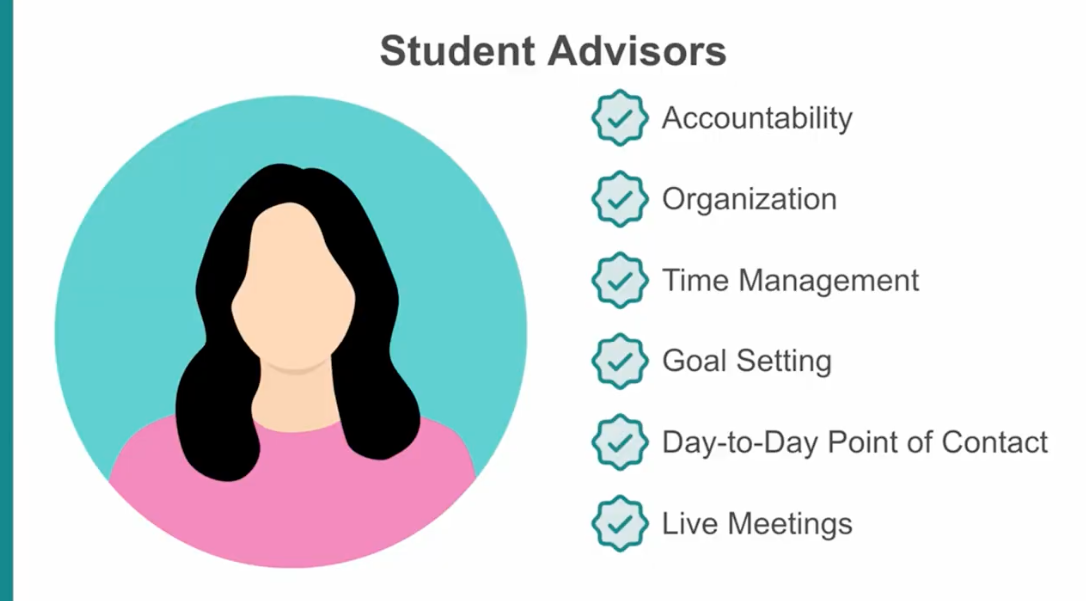
A still from School Supports video
My Strategic Approach
One of the clearest findings from my research was that the original seminar was trying to do way too much. Parents were being given everything at once, and little was sticking. I designed the series around a single principle: give parents only the absolute minimum they need to get started. The full series takes twenty minutes. Everything else — policies, procedures, detailed guidance — lives in a parent manual and policies document that we reference throughout and encourage families to consult as questions arise. Less information, delivered well, serves parents better than comprehensive information delivered all at once.
For an online school trying to build trust with new families, anonymity is the enemy. Our team agreed that the solution was to put real faces on camera. Each member of our leadership team recorded their segment using animated Google Slides I produced, speaking directly and conversationally about their area of the school. Parents meet the actual people they'll be working with before they ever have a live interaction.
I also advocated for a question capture box embedded throughout the portal. As parents watch, they can log questions in real time. When they finish the series, those questions are submitted directly to their assigned academic counselor ahead of their first meeting. The counselor arrives to that meeting with tailored answers, and the parent arrives knowing their questions are already in someone's hands. That design decision directly addresses the finding that parents didn't feel like they had space for individualized questions, and it makes the first counselor meeting significantly more productive.
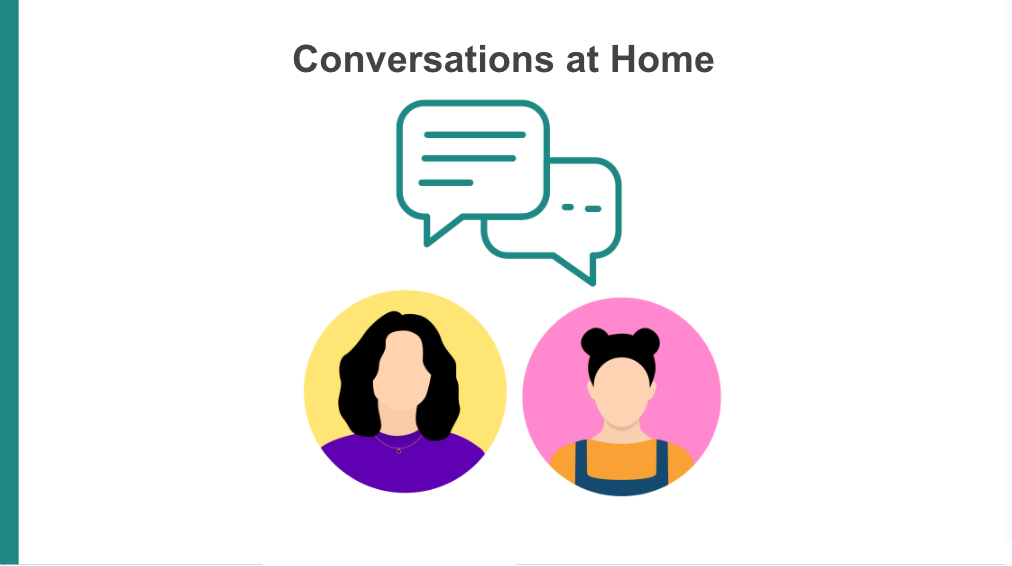
Still from Home Supports video

The Learner Experience
The experience is calm, focused, and human. Each video segment is short and covers exactly one topic. The animated slides use simple bullet points. Leaders' faces and voices remind parents throughout that real people are waiting to answer their specific questions — and that the next step in their enrollment is a one-on-one meeting with their student's academic counselor.
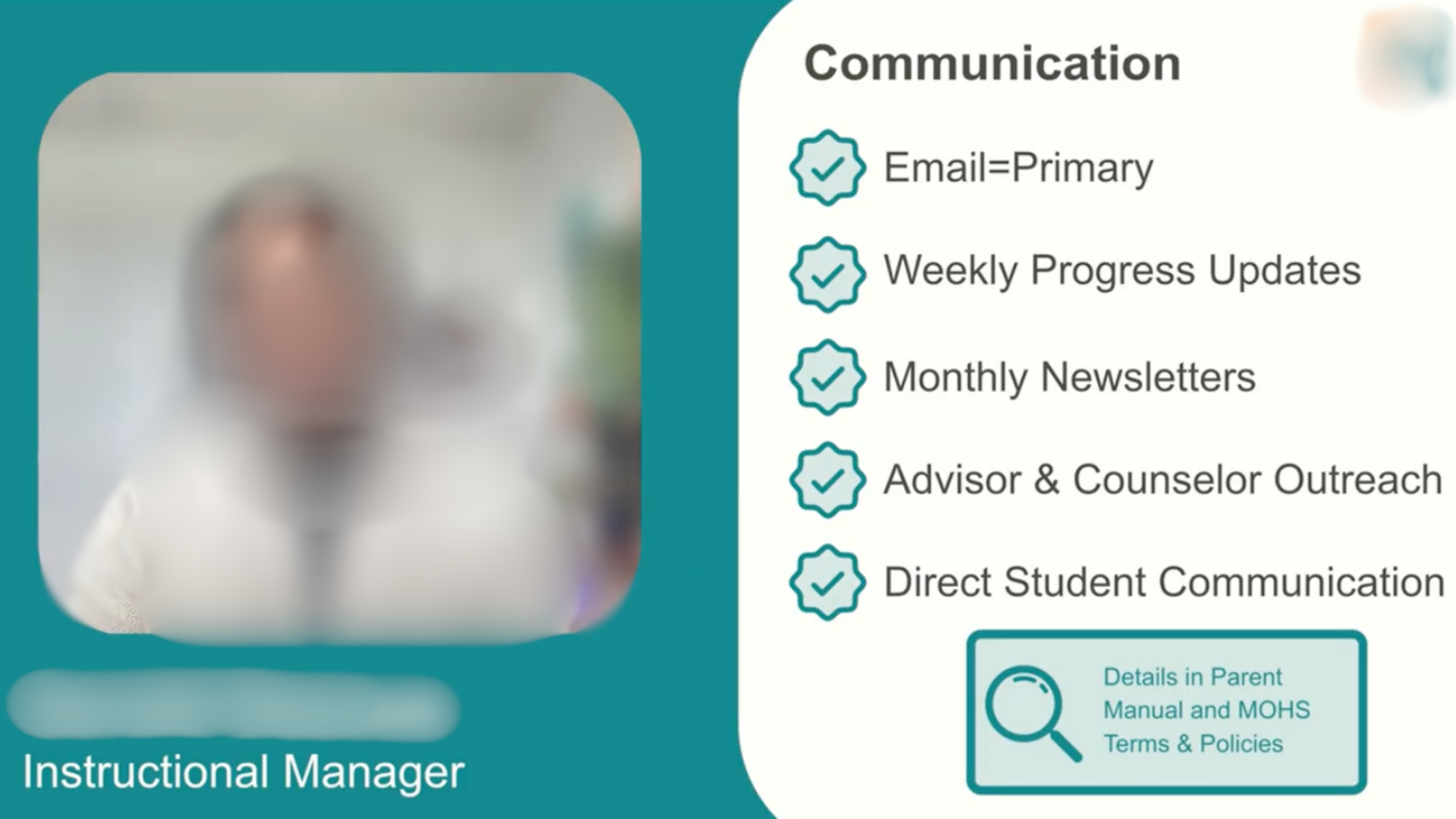
A still from the Communications video, blurred for privacy

From Design to Delivery
My needs analysis began with qualitative interviews with staff members who interact with families in the early stages of enrollment. They reported back not only on their own observations, but on direct feedback parents had shared, including responses to the question "what feedback do you have?" That picture made clear that parents were busy, often completing orientation steps on mobile devices, and needed something they could do quickly and easily on the go. I used that data, alongside my own experience as a student adviser, to build the content architecture. Given more time, I would have liked to interview parents directly; firsthand learner research would have added a layer of specificity that staff-reported feedback can't fully provide.
I initially proposed a more interactive format — one that would have given parents actual practice navigating our school systems and receiving feedback on what they tried. Leadership directed us toward a simpler acknowledgment model, concerned that a more structured format would feel like coursework rather than an adult orientation. I understand that reasoning, and I worked within it. But I believe that with more time I could have built something interactive that met both goals: the engagement and retention benefits of practice, and the lightweight feel leadership rightly wanted for a parent audience.
I produced all video assets and trained our leadership team on recording through a combination of an asynchronous walkthrough video and written instructions. I edited leaderships' rough cuts, and then I handed off final videos to a development team for embedding into the enrollment portal.
Results & Reflection
The series launches this summer. Projected outcomes include a significant reduction in weekly staff hours devoted to live seminars, stronger parent retention of key orientation information (and by extension, fewer follow-up questions for staff) and a stronger foundation of trust between families and the school from the earliest stages of enrollment. I will update this section once the series has launched and I have data to share.